Commercial mold remediation follows a different playbook from a house: more people are affected, the building often stays open, and EPA publishes a separate guide for schools and commercial buildings that sets out how the work should be planned. Expect a written scope, containment matched to the size of the problem and a plan for occupants. Call the number on this page to be connected with a local mold remediation company in Nashville.
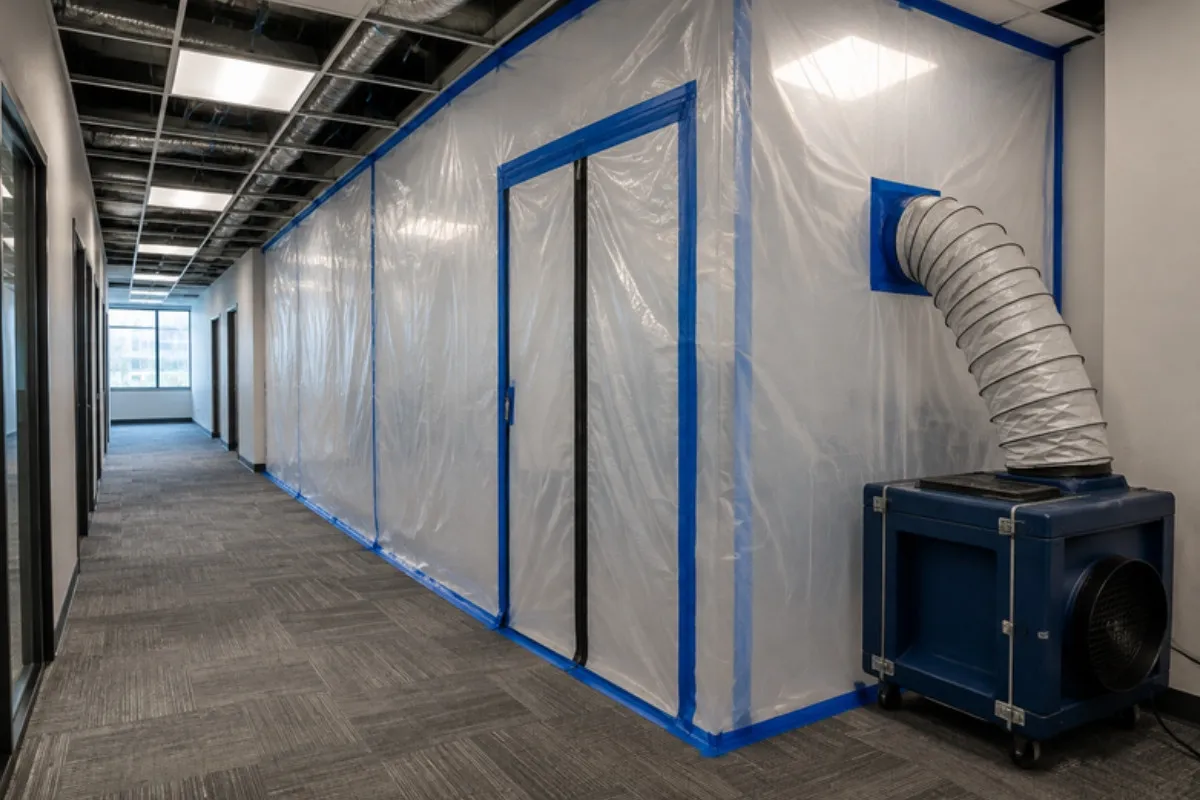
An apartment complex off Briley Parkway, a Music Row studio, a restaurant in Germantown, a church fellowship hall or an office in The Gulch all face the same issue when mold appears: other people depend on the space. The work has to protect them while it fixes the building.
Start with the water, then the plan
EPA's commercial guide starts with the moisture problem. Common sources in Nashville buildings include flat roof leaks after spring storms, condensation from rooftop and ceiling-mounted HVAC units, plumbing leaks that run between units, and lower floors that took water in the May 2010 flood or the March 2021 flash flooding. Before cleanup starts, ask for a written scope that covers:
- Where the water came from and who will repair it
- The size of the affected area and which materials are involved
- How the area will be isolated and how dust will be controlled
- Which porous items (ceiling tile, carpet, drywall) will be removed rather than cleaned
- How completion will be judged
How EPA scales the work
The guide groups jobs by area: small patches under about 10 square feet, mid-size areas up to about 100 square feet, and anything larger, with containment and protective gear increasing as the area grows. It also says these numbers are not hard rules. Heavy growth in a tight space, or mold inside an air handler that serves a whole floor, can call for more protection than the square footage suggests. EPA advises not running an HVAC system you suspect is contaminated, which in a commercial building may mean shutting down one zone.
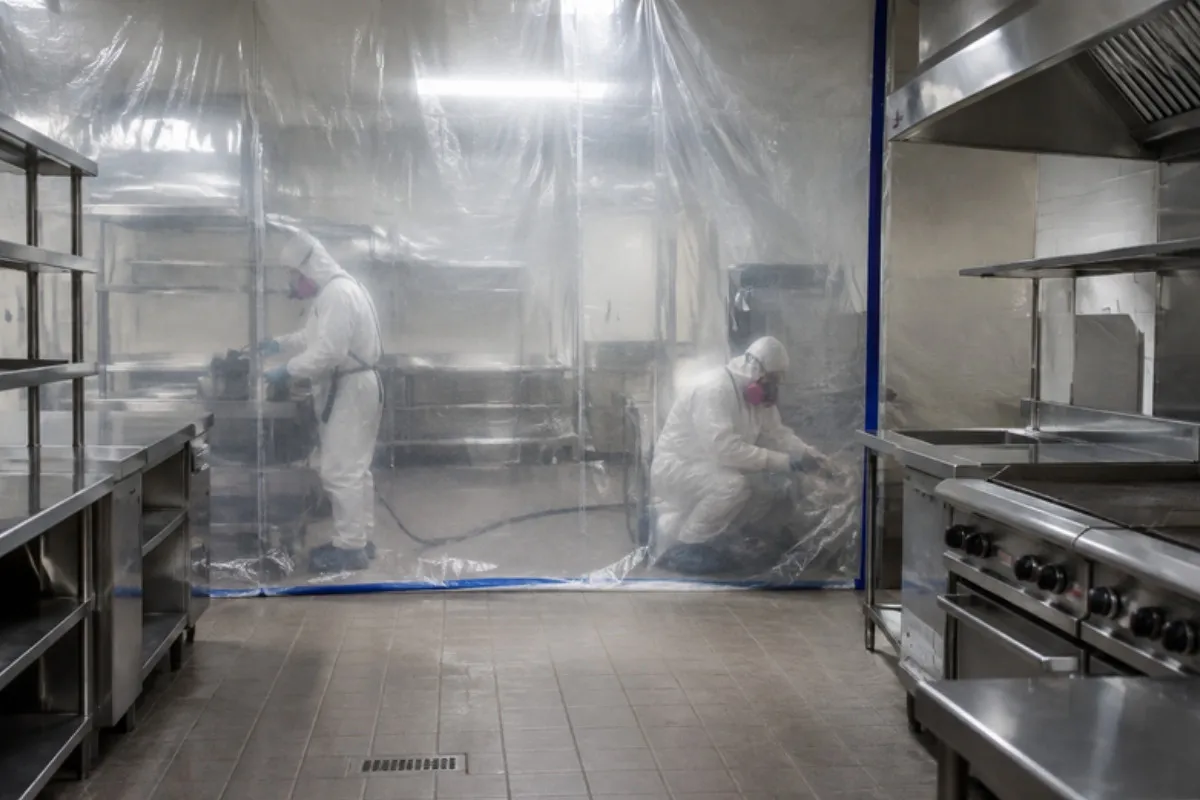
Occupants and communication
EPA suggests telling occupants about the work, weighing whether to move people based on the size of the job and any reported health concerns, and doing the work after hours where possible. Mold can irritate the eyes, skin, nose, throat and lungs, and people with asthma or weakened immune systems should stay away from the work area. Anyone with health concerns should talk to a health professional. Tenants who believe a landlord is not maintaining a building can report it to Metro Codes Property Standards.
Contractor requirements in Tennessee
Commercial jobs often run past $25,000, and Tennessee requires a contractor's license before bidding or pricing a project that size; it cannot be split into phases to stay under the limit. Ask whether the company holds a Tennessee contractor's license with the mold remediation (S-F) classification and confirm it on TDCI's Verify a License search. Work that alters walls or structural members may also need a Metro Codes permit. Many owners bring in an independent assessor to write the scope and check the result, separate from the company doing the removal.
Commercial Mold Remediation questions from Nashville homeowners
Does EPA have rules for commercial mold cleanup?
Do we have to close the building?
What license does the contractor need in Tennessee?
Should the same company test and clean?
Related mold services in Nashville
Helpful guides
Commercial Mold Remediation in nearby cities and towns
Davidson County
Williamson County
Sumner County
Wilson County
Rutherford County
Robertson County
Cheatham County
Maury County
Sources
- EPA: Mold Remediation in Schools and Commercial Buildings (pdf)
- EPA: Mold Cleanup in Your Home
- National Weather Service Nashville: May 2010 flood
- TDCI: Bidding FAQs
- Tennessee Contractor Classification Outline (TDCI)
- Metro Codes: Codes Violation Types
- Metro Codes: Residential Building Permits
- Angi: How to Hire a Mold Remediation Company
Last updated: